
Business History: Studying Mistakes That Will Be Made Again
Michael Rentiers • December 5, 2025
Despite costing the business world billions annually, we still refuse to proactively invest in public relations.
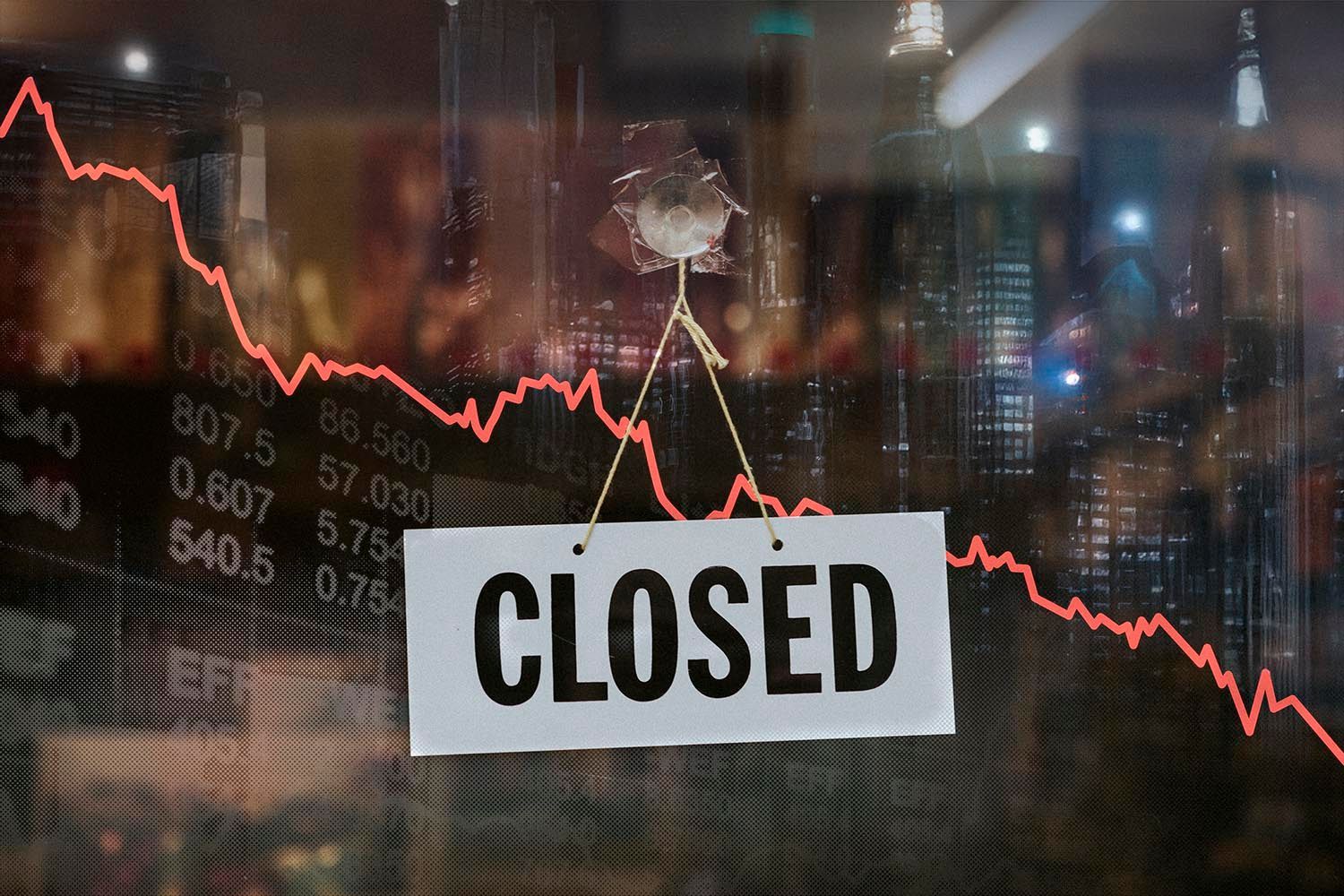
We all know the drill. If it doesn’t sell a widget tomorrow or produce a neat little ROI chart, it gets pushed off the budget. But that logic fell apart years ago. E-commerce reshaped entire industries in the early 2000s, social media helped elect a president in 2008, and by 2017 digital ad spend blew past TV. Yet somehow, in 2025, businesses still act stunned when bad PR eats into their bottom line. The numbers aren’t hiding. They’re flashing sirens.
Reputation has become one of the most valuable, and fragile, assets a company owns. Still, too many leaders treat it like an afterthought, scrambling only when a crisis detonates. Hope isn’t a strategy. Pretending not to see a problem won’t keep it from hitting the balance sheet. Reputational damage *always* becomes financial damage, usually on a scale no one expects.
A review of more than 300 corporate crises across 27 stock exchanges found an average 35% drop in share price immediately after a major crisis. Earnings per share fall more than 68%. Recovery takes about 425 days—if it happens at all.
Private companies aren’t spared. Nearly 20% of leaders navigating reputational issues reported losses over $500,000, and another 18% reported losses between $100,000 and $500,000. And those numbers barely scratch the surface. Lost contracts, churn, hiring challenges, and the marketing bills required to rebuild trust multiply the damage long after the headlines move on.
Some crises are even costlier. Cyber incidents alone carry steep reputational and regulatory fallout. Large enterprises spend around $200,000 on brand repair per breach; small businesses average about $8,000, which can gut a tight-margin operation. And social-media-driven crises routinely climb into the millions when customer behavior shifts overnight.
The pattern couldn’t be clearer: unprepared companies pay more. Organizations with strong reputational foundations and real crisis-communication plans recover faster, retain more trust, and avoid the financial free fall that comes from scrambling in the dark. Transparency, speed, and smart messaging shape public perception. Hesitation always makes things worse.
This is why reputation management and crisis planning must be treated as core business functions. The investment is modest; the cost of inaction is staggering. Clear communication frameworks, scenario planning, social listening, media training, and defined response protocols can save companies millions—and build the goodwill that softens future blows.
Today’s landscape offers no hiding spots. Expectations are high, memories are long, and visibility is total. Companies that prepare will ride out turbulence. Companies that don’t will learn, the hard way, what a damaged reputation truly costs.
A crisis may be unpredictable. Ignoring it is not.
News & Opinion

Businesses have long understood the value of lobbying, coalitions, and direct engagement with policymakers. That world still exist...it still matters, but the the most powerful way to shape public policy is by harnessinb Public policy today is shaped in two parallel arenas: inside legislative chambers and outside them, where public understanding, voter pressure, and narrative momentum are formed. Increasingly, that second arena is digital. Political and advocacy spending tells the story clearly. Billions of dollars now flow into digital political advertising, issue advocacy campaigns, and online persuasion efforts. This isn’t accidental. Digital channels offer something traditional advocacy never could: precision, speed, and scale. Digital advocacy allows businesses to reach specific audiences—voters, community leaders, employees, regulators’ constituents—with tailored messages about how policy proposals affect jobs, prices, innovation, and economic growth. It allows organizations to explain complexity, counter misinformation, and elevate pro-business perspectives before legislation is locked in. Just as importantly, digital influence is measurable. Engagement, reach, sentiment, and message penetration can all be tracked and adjusted in real time. That makes digital advocacy not just powerful, but accountable. Meanwhile, lobbying spending continues to hit record highs. That tells us something important: shaping policy is expensive, competitive, and increasingly crowded. In that environment, relying solely on behind-the-scenes influence leaves value on the table. Public opinion still matters to policymakers. Voters still matter. And voters increasingly learn about policy online. Businesses that invest in digital advocacy aren’t abandoning traditional influence—they’re amplifying it. They’re reinforcing their position in the places where narratives are formed, pressure is applied, and legitimacy is built. Public policy will continue to shape markets, labor, energy, technology, and growth. The question isn’t whether businesses should engage. It’s whether they will engage where influence actually happens. Today, that place is digital.

For decades, businesses understood information flow through a familiar lens: television, newspapers, maybe radio if you were feeling ambitious. That mental model is now dangerously outdated. It can't be a surprise that the overwhelming majority of Americans get their news digitally - via phones, tablets, or laptop. Online news comes from a myriad of sources, usually a mix of websites, social platforms, and influencers from an algorithm-driven feed. For younger and mid-career adults, social media and digital news sources don’t supplement traditional media; they replace it. Television remains influential with older audiences, but even that dominance is eroding as streaming, short-form video, and mobile news reshape habits. This matters for brand protection. Reputational risk no longer breaks on the evening news. It breaks online, in real time, often before a journalist is even aware something is happening. Narratives form quickly, spread faster, and harden long before a press release can catch up. If your organization is not actively participating in the online information ecosystem—monitoring it, shaping it, correcting it—then others are doing that work for you. And they may not be friendly. Digital platforms are not just distribution channels; they are arenas of influence. Search results, social feeds, comment sections, and shared articles collectively determine what stakeholders believe about your brand. Silence is no longer neutral. It’s a vacuum. The smartest organizations have already adjusted. They think of digital communication as a form of infrastructure—something that must be maintained, stress-tested, and strategically designed long before a crisis hits. They invest in online presence not because it’s trendy, but because it’s where public understanding is formed. TV and print still matter. But they are no longer the center of gravity. If your brand protection strategy still assumes that influence flows top-down from traditional media, you are defending yesterday’s battlefield. The conversation has moved online. That’s where credibility is built, challenged, and either protected—or lost.
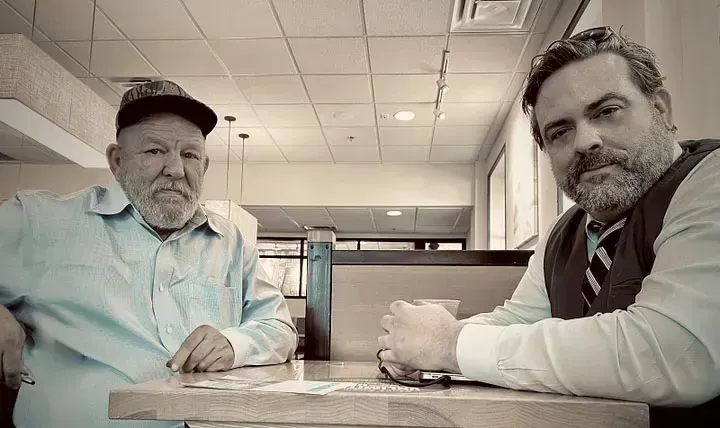
The last few years have taken me down a path I never expected. During the early days of COVID, when the world felt suspended and my professional work slowed, I found myself working out of a small café in Columbia, SC. One afternoon, a homeless man approached and asked me for money to buy lunch. Instead, I invited him to sit with me. Over sandwiches, he shared his story. He was a Vietnam veteran whose life had unraveled in ways that were gut wrenching to hear and, as I would learn, far too common. I went home and dug into the facts about veteran homelessness. The statistics were jarring, and now they had a face and a name, Daniel. His story stuck with me. I’ve never been one to sit idly by, stepping up never scared me. But what could I possibly do? The answer was simple. Do something. Do anything. Afterall, what have those guys done for me? More than I could ever repay. I kept hearing the same words echo in my mind: If I am only for myself, who am I? If not now, when? I had done PR work for veteran causes before, but this time professional experience didn’t feel like enough. I felt compelled to act personally. So I began spending time on the streets around Columbia, building relationships with the men who had served our country only to have our country fail them. That led to the creation of Without Heroes, a nonprofit dedicated to working directly with homeless veterans one relationship at a time. My theory was simple: transformation begins with consistency and trust. The plan was to intervene in their lives individually to provide the support they need to reach stability. Even if I could only impact one life at a time, that was still meaningful change. Time has passed quickly. The work has been challenging, profound, and humbling. It changed how I see people. It changed how I see service. And it changed how I see the responsibility that comes with having skills that can make an impact. However, I’m returning to my professional world with renewed purpose through my new communications firm, CTA Communications. It’s named after my experience, a Call To Action. I’m bringing back everything I’ve learned…about people, about storytelling, about advocacy, and about what it means to respond when the moment calls. Without Heroes will go on. There is so much work to be done, but it’s time for the next chapter and a return to doing what I love. If you’re interested in getting together, get in touch!

How many of you are politically engaged and have bad-mouthed a politician in your party for being open to compromise?